Chapter 5 · Urban habitat
Urban Villages as new centres of Habitat Economy
30 min read · 11 sections · starts on p. 109
Traffic jams are a civilizational loss. Using the Dutch bike economy as a mirror, the chapter designs urban villages: 15-minute cycling cities, community kitchens and farms, schools within walking distance, co-living merged with co-working, and goals measured in AQI and soil carbon rather than GDP.
Being a film buff, I keep visiting old classics once in a while. During such a sojourn with the movies of Jean-Luc Godard, one of my favourite directors, I happened to watch his film Weekend (1967). His visual language is very impressive even if you may not agree with his political ideology. There is a unique sevenminute tracking shot along a stalled column of cars while the lead couple, Corinne and Roland, embark on a trip to secure an inheritance by murdering Corinne’s mother. This journey is interrupted by an endless catastrophic jam along the road. Those seven minutes are really heavy to carry for a viewer. As the camera glides past honking motorists, drivers playing chess, families having picnics on roadside stops, blood-soaked accidents, the filmmaker forces the audience into systematic brutality of what we made out of our own lives. It becomes a question whether a traffic jam is a failure of modern infrastructure or its real destination.
5.1.0 Traffic jams are not just a personal loss but a civilizational loss too
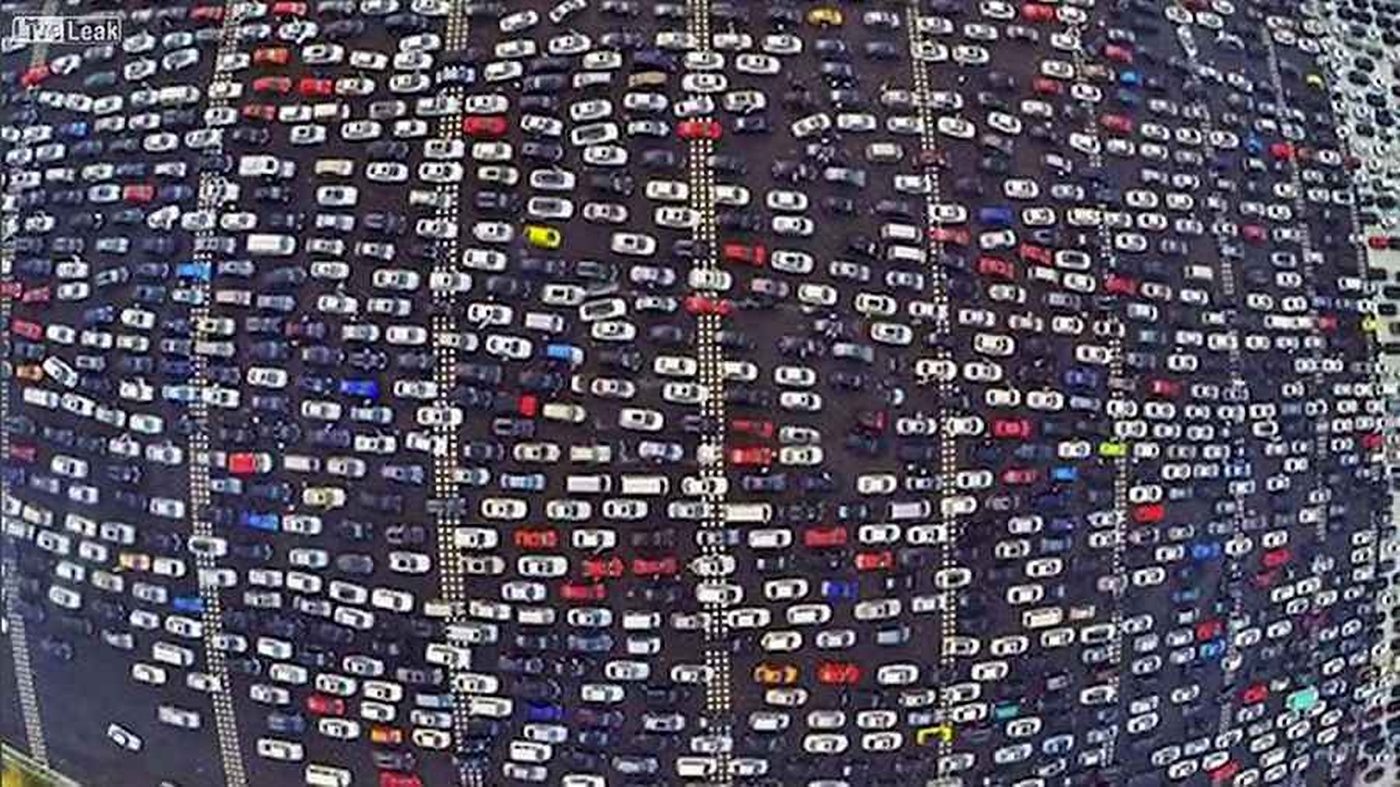
Facts can be far more difficult than fiction. In August 2010, there happened an epic traffic jam that lasted over 12 horrible days. The chaos extended over 100km making it the longest recorded traffic jam in history. Between Hebei and Inner Mongolia on China National Highway 110, there was a gridlock affecting thousands of vehicles. As all were stranded, a short-term economy emerged where food, water and cigarettes were sold far above their fair price. The stranded drivers could only inch ahead at a speed of just 1km per day. Whether it is cinema or life, the automobile traffic jam represents a terrifying paradox. Automobiles were supposed to be supreme instruments of individual freedom and technological velocity, but a traffic jam is an anti-reality of this dream. It may be a big car or a small car, an old car or a new car, a diesel car or an electric car, everything comes to a standstill. Whether you are in downtown Dubai or Singapore; whether you are in Mumbai or Delhi; whether you are in Ludhiana or Kuala Lumpur, traffic jams are a universal reality everywhere. It seems that someone sitting at the top is laughing at us. The faster we decide to move, the slower we are rendered to bear. Not even slower, it is a state of civilizational stroke from a pathological lens. It happens daily in our lives sometimes in the morning, sometimes in the evening, sometimes during festivals, sometimes during a mall visit, sometimes while going for a cricket match, sometimes while picking up our kids from the school and so on. It is so ingrained in our routine that it has become an integral part. The individual tolerance with a dysfunctional system keeps recurring again and again. The irony is that a traffic jam rarely becomes a moment of phase-shift. The moment bottlenecks are eased; everybody drives away without any regret as if nothing had happened. The question comes down to how many more traffic jams we can handle. Shall we abandon our cars and break out of this messy infrastructure with a massive musical defiance like that of protagonist, Bobby Dupea (Jack Nicholson), a former classical piano prodigy in Bob Rafelson’s New Hollywood classic Five Easy Pieces (1970). Can we all reimagine traffic jam at an elevated stage where all frustrated passengers come out and suddenly burst into a synchronized musical performance as it happens in the opening sequence of La La Land (2016) directed by Damien Chazelle.
5.1.1 Netherland’s bike economy is a musical symphony in a global traffic jam
Netherland has over 32,000 km of cycleways that are physically segregated from the motorized traffic. No traffic jams, no safety issues, elderly as well as kidfriendly movement. Nearly 30% of daily traffic moves through cycle trips making it a multi-billion-dollar macroeconomic engine. The bike network acts as a feeder system for the national railway network because over 40% of train passengers arrive at the station by bicycle. The scale of the Dutch system is tremendous as it can boast 22 million bicycles for 18 million residents. What nobody could even imagine, bike economy is an equal partner to the train and automobile networks in all the national transit routes. The question is what was the La La Land moment for this country that made them choose a different path to daily traffic. Around the oil crisis of 1973, the Netherlands saw a massive grassroots movement called "Stop de Kindermoord" (Stop the Child Murder) that protested against traffic deaths. The government relented despite initial resistance. The system redesigned away from a car-centric urban design to a dedicated bike corridor network.
5.1.2 Why LOLR could not brainwash the Dutch population?
The Netherlands is a unique geography. Around 26% of its land is below sea-level, and another one-third is under the threat of regular flooding. So, this shared risk has a unifying effect on all the population. It is a shared burden, borne by all. It has turned into a unique Dutch consensus-based political and economic culture, known as the "polder model." A vast chunk of the country is actually a land claimed from water. Historically, dikes and polders were difficult to build and impossible to maintain alone, forcing competing local interests and conflicting groups to cooperate in the face of a common enemy. This cultural trait of compromise and cooperation defines how they approach not just water management, but major economic and social issues to this day. ingenuity, cooperation and an egalitarian and democratic society. Dutch people are highly aware of their geography and the associated risks. No citizen is ignorant of the threat of water. This awareness is reflected in their willingness to pay substantial water taxes, which are set to rise to €465 per average household in 2024 to keep the country habitable for future generations.
Unlike the intense "culture wars" surrounding bike lanes in cities like London, New York, or Paris, the Dutch system enjoys almost universal consensus. Dutch motorists rarely complain about cycle paths because they recognize a simple truth: every person on a bicycle is one less car in front of them at a red light or competing for a parking spot. The separation of traffic elements drastically reduces driving stress and keeps the roads open for those who genuinely need to drive. Cycling is completely stripped of socio-economic status. It is not viewed as a progressive political statement or a lower-income necessity. The Dutch Royal Family, the Prime Minister, corporate executives, and school children all utilize the exact same cycleways, neutralizing class warfare over public space. The transition was executed incrementally over five decades, avoiding heavy-handed, overnight disruptions. They designed urban environments where driving is perfectly viable for long journeys but at the same time, cycling is more practical for local trips. So, citizens naturally opt for the most efficient tool for the job.
If we view the centralized and restraint-free LOLR as a corrupting influence across the world, why did it fail in Netherlands? The truth is, the Dutch didn't defeat negative forces with pure, starry-eyed altruism. They proved that under the right constraints, bike infrastructure is actually a hyper-efficient optimization machine. Car-lovers may love luxury but are bound by the laws of physics and geometry. A vast land in Netherlands is low-lying, meticulously reclaimed from the sea (polders) at astronomical engineering costs. When American-style car culture began creeping in post-WWII, Dutch planners did the spatial math:
- A moving car requires roughly 20 times more space than a moving bicycle.
- A parked car devours 12 square meters of premium real estate.
In a country where every square meter of land had to be manually pumped dry of ocean water, dedicating massive swathes of cities to stationary, two-ton metal boxes was an economic atrocity. The Dutch realized that car-centric design is an incredibly inefficient use of premium spatial capital. By framing the bicycle as a tool for maximum spatial throughput, they won the economic spreadsheet argument. Instead of banning cars or just painting lines on regular roads (which causes intense friction), the Dutch built a dual network. They constructed magnificent, unrestricted highway networks between cities for logistics and long-distance travel, satisfying the industrial transport lobby. But inside the cities, they intentionally made driving slow, circuitous, and frustrating while making bike paths direct and frictionless.
In the Netherlands, the universal healthcare system means the state and large insurers bear the long-term financial burden of a sedentary lifestyle. When empirical data proved that regular cycling prevents billions of euros in cardiovascular diseases, diabetes, and mental health crises, the financial elite shifted their stance. The bike infrastructure stopped being viewed as an expense and started being calculated as a preventative healthcare subsidy. The corporate state realized it was literally cheaper to build an €85 million underwater bike garage than to pay for the collective bypass surgeries of a lazy population. The Dutch exception shows us that the global conspiracy of bad urban design isn't inevitable. It just requires a society to value its space, its health, and its collective survival more than the shortterm convenience of an automobile. Here, the prosperity model does not come with Ferrari or Bentley but with bikes. The GDP per capita is over $65,000. Not only that, these figures overperform also if the purchasing power parity figures are considered and household consumption charts are checked. Among developed countries, its level of income inequality is among the lowest. There may not be a big number of billionaires, the healthcare is affordable with good pensions and social safety net. Could you have imagined that a country that erases “mobility poverty” would perform far better on the maximum parameters of abundance for all.
5.2.0 Urban building codes are stuck between traffic and housing planning
The obvious question that comes from the above example is why the rest of world could not build such an equilibrium between different modes of traffic movement. The answer is not an easy one. It is a century-old paradox in planning literature. It is called “car-code colonialism” or sometimes “borrowed urbanism”. Around 1923, minimum parking requirements were introduced as an American invention in Ohio first. What is modeled in the top layer of LOLR is considered as the silent standard for the rest of the replica operating systems. For a large country like the USA, the building codes were designed to ensure sufficient space for car mobility and car parking but in developing countries, the building design is American but building codes are local that create traffic jams.
For America, the postwar construction boom as well as car ownership exploded. New zoning ordinances required off-street parking sized to each building’s use- one space per apartment, a ratio per square foot of retail, per hospital bed, per church pew. The critical thing about this code is that it wasn’t really a building regulation but it was a systems’ regulation in the garb of building regulation. It made sense within only three conditions that came with it in America but rarely travel with the code itself: wide roads for free-flowing traffic, land cheap enough for parking lots and low enough baseline density of population. Donald Shoup, the UCLA planning professor who has spent a career arguing against these mandates, calls it “a long train of consequences” – parking rules that damage the economy because “everything everywhere has to include the cost of parking”, a cost borne even by people who don’t own a car. A single parking spot in New York city costs around $36,000 to build. If you import the same ratio into a city without an alternative, the number will get worse.
Building codes are exported with very low friction in a globalized world. They never got written particularly when the technical-assistance packages for the rest of the world were led by the World and Asian Development Bank like institutions. Imagining a world-class city was a settled definition and it was the one with glass towers with basement parking whether it was Gulf states of Dubai, Abu Dhabhi, Qatar or Asian cities of Singapore, Hongkong and Kuala Lumpur. India is the most appropriate example of the mismatch. The National Building Code, administered through the Ministry of Housing and Urban Affairs, mandates residential complexes to provide at least two car spaces for every 100 sq. m. of floor area sold with builders in each state required to provide this before getting approvals. Now, see the same code being implemented in a city like Chennai. It has over 9.2 million registered vehicles in 2022 against the availability of only 14,000 active public parking slots that meant 650 vehicles for each parking space. As the problem started crossing tolerable limits, the government came up with a mandatory rule that every car buyer was supposed to show proof of owning a car parking space. However, the execution of this rule was so weak that cars still end up on the street because the rule was imported without the institutional capacity to enforce it. This same asymmetry shows up everywhere and that is why it becomes “car-code colonialism”.
5.2.1 How did we go against a city inside a 15-min cycling range and affordable housing
Bad copy-paste zoning rules can end up into a mess when they are not in sync with natural evolution of an urban habitat. Across Africa, Asia and Latin America, the dominant urban form long predates any imported code; wide arterial roads spaced far apart, with dense, twisting networks of alleyways, courtyards and pedestrian-scale buildings filling the space between them. But the game changed after importing car-code logic. Only the new buildings could implement this. It meant the rise of separate foreign looking spaces in the Global South. For example, the capital city of Philippines, Manila has its primary circumferential highway and transit backbone called EDSA. Its gated communities made their internal road network private and inaccessible to the public. It meant that all of those roads would end up on the single arterial road, EDSA. The result is that the average car speed on EDSA is about 15km per hour. These gated enclaves fragment the city and worsen congestion. This is not a parking ration problem rather it is the faulty implementation of an American model into a city with high-density and less open space. In the USA, a 6-lane freeway could easily absorb the diverted traffic but in Manila, it could not. Across all the major cities of Southeast and South Asia, the upper middle class has retreated into gated communities in response to crime fears, weak public services and weak land-use enforcement and disconnected street networks. And all this is opening up on a public infrastructure that cannot absorb all the cars coming on the street at the same time. The result is congestion, pollution, high energy use and CO2 emissions. The cost is not just increasing at macro level but individual users are paying extra for this too. UCLA’s Institute of Transportation estimates that parking requirements add $50,000-100,000 per apartment unit in the USA. Parking does not just add cost, it displaces units. If you replicate these costs for an Indian city, the result is same for the end-user. Basement parking in India adds anywhere between Rs.210,000 to 630,000 per unit apartment. For affordable housing units, the actual cost might be higher because of their large number in a complex. On ground, the actual payments can be even greater in cities like Bengaluru and Mumbai. So, what one considers as mandated parking does not relieve congestion, it ends up manufacturing it. Guaranteed parking at both ends of a trip makes driving a rational choice but since many are driving, a big chunk of time is spent cruising for parking. If the problem is bad in the USA, it is horrible in an Indian city. The mismatch between parking requirements and system’s ability to handle the traffic creates a double whammy. The buyer pays for the parking twice: once in the purchase price, once is the congestion externality.
5.3.0 Getting out of traffic jam literally and truly
The question is whether you can build your own version of the Netherlands. You might sense here that I am going to suggest something hopeful. No, hold on please. You are in a traffic jam right now. If that is what you appreciate, nobody can help but if you want to get out of it, you will have to ask why you entered a traffic jam and remained stuck there. Traffic jam is not a deliberate decision rather it is a collectively forced error for human beings. It is forced due to the ecology of bad choices under the influence of LOLR governance regime. We copied from America what was not suitable for the rest of the world. While we wanted to replicate ourselves into the copycats, we ended up as fragmented urban localities that were unable to sync. That is what needs to be addressed.
Though this is not a problem that can be solved with a magic wand. It needs a behavioural hack on the part of citizens inhabiting the urban complexes particularly. Why is there a traffic jam? The reason is that we go out daily and that too many times a day for multiple activities. Kids go out to school and colleges, we go out to buy food and groceries, we go out for dine-out, we go out for our jobs and businesses. Though there is nothing unnatural about this, but why go out for each damn thing? Let me propose an urban code the way something similar was done 100 years back in America. Let us enumerate it into the six principles as follows: -
- Grow your food as much as you can, within your premises or within 2km of the same.
- Build as many community kitchens as needed within 500m distance.
- Convert the existing building spaces into free creches and play way centres for kids.
- Conduct all primary school teaching within walking distance of your homes.
- Convert open or vacant flats inside housing complexes into co-working spaces.
- Build on-chain community currencies to manage local economies within a limit of $100million.
Just observe these six principles for a moment and ask yourself whether it is more difficult than spreading a building code for parking spaces. This is the difference between a cash-rich and care-rich environment. What messed up urban habitat over 100 years needs to be ethically hacked from inside to carve out beautiful care surplus possibilities out of the same. If citizens choose to unburden themselves out of a colonial urban planning code, they can reduce their urban transport requirements by a huge margin. If planned wisely, a metropolitan can easily become an archipelago of urban villages, and a village can cover ten to hundred building complexes inside it. This would use the existing infrastructure without building anything new. Just change the rules of living and customize your surroundings accordingly.
5.3.1 Reduce food cost via community kitchens and community farms
If you look at kitchen systems operating in nuclear families, the burden of cooking falls disproportionately on women. This is an activity that is generally three times a day, seven days a week and 365 days a year. This is not a labour job but far worse than that. It is a responsibility that she has taken out of love, but she realizes that it is a permanent trap. If there is a kid or sick person in the home, this burden multiplies rapidly. It is not a surprise that nuclear families order food via food delivery apps quite regularly because cooking food again and again is a humongous burden if it is falling on the same person. Now, imagine the same housing society having two community kitchens where the cost of food is half, but the quality of food is pretty good and reliable. You don’t need to pay for the delivery cost because the kitchen is only ten floors down.
One should not look upon this from the lens of idealism because a building can have both kitchen-free apartments and with-kitchen apartments too. A kitchen accounts for 20-25% of the construction costs due to plumbing, gas lines, water proofing, ventilation hoods and cabinetry. By centralizing these into one high-grade community kitchen, one can reduce per-capita cost of both housing and daily food. If a resident family or individual opts for a kitchen-free apartment, it can reduce the cost by a considerable margin as well as relieve valuable space for living rooms and bedrooms. Instead of 200 families buying 200 rice cookers, 200 refrigerators, 200 sets of cookware, the community buys 20 big rice cookers, 10 big refrigerators and other cookware. All maintenance and energy consumption can be pooled into some sort of subscription model. This would save immense energy and labour costs too for the residents. If they choose to cook themselves and support the kitchen via contribution of their time, this can become a true currency for their life. A communal kitchen is the ultimate care hub as it will automatically solve isolation, loneliness and needless micro-conflicts. When everyone knows everyone, it automatically resolves the need for surveillance. When kitchen waste is coming from one single unit instead of 200 units, it would be easy to dispose of it and it can be converted into compost too. A community kitchen can easily be run by a community currency that can also be used in common laundry payments, common area management fee and even for creches and play-way schools in the complex. You might ask why this entire cost-cutting has not happened despite its obvious potential. The answer lies deep inside yourself. Remember when I told you about the third layer of LOLR that comprises manwoman social contract. A community kitchen would bypass a moral regime that has singular reliance on patriarchy. If people choose to resist this monoculture of practice, they can achieve success, but the pain of a traffic jam is still not great enough for them to digress from the trodden path. They should be ready to cruise for parking when dining out at a restaurant, they should be ready to pay for high cost of food purchased via delivery apps or they should be ready to pay the relationship cost of a kitchen-plus home where the women remain irritated due to high and recurring burden of cooking and cleaning.
If the depth of human cooperation is sustainable in a community kitchen, the experiment can also be extended to build a community farm also. It does not need to be a big one rather it can be raised along a footpath like five patches of 3 feet x 60 feet farms where people can grow vegetables of their choice. It may be done in an aquaculture mode where fish-farming can be done along with growing fruits and vegetables. It can not only reduce the cost of food per person but can also ensure nutrition-rich food. Those people who don’t visit community kitchens regularly or cook food inside their own private kitchens can purchase these on a regular basis providing instant points of consumption.
5.3.2 Learning and Transport sync together in the ecology of a city
For some people, the amalgamation of learning into urban ecology might appear too difficult but let me elaborate what has been accomplished in Japanese cities and how they have been designed to be navigable and safe for children. In cities like Tokyo, Osaka and Yokohama, there are specific child-friendly routes to and from schools. They are not just paths on a map; they reflect the care surplus nature of a society that believes in the autonomy of kids. There is a cultural heart involved in such a design. All communities are treated as extended families. Children are looked upon not as the responsibility of parents only but all of them share collective guardianship. Children are sent for their solo errands as their first initiation into community life. This practice is celebrated and observed widely to make cities extremely safe and liveable ecologies.
Even schools observe a strong community ethos. All kids share the same community kitchen food that is cooked within schools. A school is like a home, and everybody takes care whether it is learning or hygiene, teachers or students, small building or bigger building. Japanese urban design prioritizes pedestrians. Under the 1962 Garage Act, one cannot register a car in Japan without obtaining a parking space certificate from the local police. You must prove that you have access to an off-street space which must be within 2km radius of your registered address, must fit the vehicle entirely with no part protruding on the road and a police officer physically visiting the site within 3-7 days for verification. The goal was not to stop people from owning cars rather it was to stop narrow streets from becoming clogged. If the street is empty of parked cars, it means no blind corners, no doors opening into the walking space, no weaving between bumpers into a traffic lane and crucially, clear sightlines in both directions for the children. Roughly, 70% of Japan’s ordinary road network is under 5.5 meters wide. These streets have no sidewalks that means pedestrians and cyclists occupy the centre of the road at the same time. Sidewalks were made in America or elsewhere to separate pedestrians from the traffic so that cars can travel faster. Japan removed the separation on a narrow street. So, a driver has no choice but to slow down and pay attention. The street becomes self-enforcing. Either they are carfree or they have very low speed limits, treating cars as guests. They hacked the principle of urban mobility and made it available to young kids. Along these routes, neighbourhoods are blended with shops, services and housing that means daily errands and trips are often short and walkable. The public transport hubs are seriously managed so that overall reliance on cars for daily movements is minimal. The idea behind this story is not to idealize Japan. They are themselves suffering from a reduced population because family systems are still quite nuclear. The cost of housing is still very high, and the size of the houses is generally small. The system does have very low corruption, but it is still a top-down and a macho model. It puts hard work and dedication to state and corporation at a high pedestal, but these big entities mistook cash-surplus for a care-surplus world. People were in such an awe of their bosses that they spent their time and energy in keeping them happy and forgot to reproduce kids. The average kid per woman is around 1.1, half of the normal TFR needed to keep the population intact. Their cuisine is good but community kitchens as suggested above are not very common. Women are supposed to serve their husbands. The feminine world-view is missing in their perspective. Imagine what if Japan had created a national currency for females only where they were given lifelong retainership via pro-natalist schools, hospitals, local shops, restaurants and other community organizations provided they have at least two to three kids. This might look weird but one cannot rule out the fact that cash surplus is a masculine domain and care surplus is a feminine one and both could never meet in the monetary field. Now, we are paying the price of this gap. A big part of schooling needs to be shifted from institutional model to informal community networks that exist within housing complexes or within walking distances. What was the domain of the state needs a community handover.
5.4.0 Replace GDP figures with long-term goals like AQI, Temperature, soil carbon etc.
Urban habitat is a function of many interdependencies. Every area has its own value, but the parameters of this value can be unique. The way GDP figures are considered important for a country, a city and its different locations can have different value depending on unique indices like its AQI, median temperature during day-time, humidity levels, quality and cost of food, housing, education, live status of road traffic jams and so on. Every city needs to build a scientific foundation of these parameters and should make them a shared public record on a real-time basis. It can easily be related by some aggregation with GDP figures too. Imagine a municipality token that is tagged with local parameters and is used for parking fees, traffic fines, property taxes and so on. The local government pre-declares a punishment for all the residents of the city if it fails to achieve a certain level of AQI, temperature, housing cost or other factors. For a national-level resolution of big development challenges, the beginning has to be made at municipal level only. A blockchain-based smart contract can easily use an oracle feed to govern public behaviour where higher value of fines and taxes are directly proportional to their own contribution to the collective system. What is being suggested here is that a sufficiently decentralized system can prevent things not only from going bad to worse, but it can also nourish it back to a great health. There are a lot of things that are beyond the resolving power of LOLR in the urban habitat space. Without enabling on-chain and political decentralization, the status of urban governance is never going to heal.
5.4.1 Convergence of co-living with co-working spaces
A big part of traffic is due to people moving out daily to reach their offices and businesses. However, Covid changed a big part of this movement. Work-fromhome was accepted as a big part of office routine across the world but if you look at an apartment complex, you will find a lot of professionals working from their homes. This gets boring after some time as professional associations and informal chats with co-workers become difficult. With the onset of AI-driven job losses, the tensions are only rising among working professionals. That is what necessitates coming together of good minds. If a co-working space is made available within the housing society, this may become the nucleus of social projects as well as new startups. These co-working spaces will be far less costly as compared to the regular office spaces with per chair cost configurations. When the kitchen, creche, play-way and primary school and home are within a walking distance of a few minutes, men and women can work peacefully and build new wealth models suitable for the post-AI century. Now, if you zoom out and have a bird-eye view of a big housing society with an in-campus farm for food, three community kitchens for serving different kinds of food for different needs, merger of co-working and co-living spaces and all this working within a DIY crypto-kit of community currencies, smart contracts and DAO-models of organizations, the whole set up won’t appear a speculative bubble. The real problem is the friction caused by LOLR stakeholders whether they are banks preventing account services to crypto orgs, urban planners denying co-working or kitchen licenses to the housing societies, the education department stopping people from building creches and schools. Killing green shoots is pretty easy for these government-regulated machines because they work via creating a field effect. But once people realize that their compliance is leading to their slavery and nobody is getting benefit, they will refuse to accept a civilizational consensus that is leading to traffic jams, both on road and in life. A one serious transformative departure can cascade into a counter-trend. Though we have yet not seen it, crypto swarms can make it happen any time anywhere.
5.5.0 Dream 2065: 1,000 eco-cities with market cap of $10 trillion
2029 was the darkest year for the entire planet. It turned out to be a big year of environmental disasters one after another. January started with a big glacial flood in Nepal and it was far worse than what had happened in 2026. It killed 80,000 people and decimated nearly one-third of the country. February saw a similar event in Uttarakhand region, the Indian side of the Himalayan range. The combination of earthquakes and floods was so great that thousands of houses collapsed, half due to tremors and the other half due to floods. March saw a sudden breakup of a big glacier in the Greenland zone and it affected a lot of coastal areas on both sides of the Atlantic Coast. The low-lying areas of both New York and London were submerged. April and May saw massive wet-bulb heat events in IndoGangetic plains of Northern Indian and Indus valley region Eastern Pakistan and killed thousands of people working in the open fields and roads in a matter of days. Hospitals got an overwhelming flow of patients and power grid buckled under huge AC demand.
The year 2029 turned out to be so bad that almost all the corners of the world saw some big calamity or the other. Mumbai and Dhaka saw massive deluge during monsoon seasons and flooded all the low-lying areas followed by weeks of dry spell that damaged over 80% of rice fields. Chad, Niger and Mali saw continuation of multi-year drought and faced crop failure, livestock die-offs and Lake Chad continued to shrink. Europe went through hot weather again and even the Rhine River stopped flowing in certain parts of Europe. Aquifers collapsed in Spain and Italy. Thousands of olive groves and greenhouse farms failed. Greece, Southern Spain and Algeria saw massive forest fires that outran fire-fighting capacities of the governments. The Persian Gulf heat ceiling crossed all limits creating a kind of “climate curfews” during the day-time. Most of the rivers in Iraq, Iran and Turkey dried up. Even the Colorado river in the USA dried up also. Buildings and pipelines started sinking in Alaska due to arctic permafrost collapse. Peru and Bolivia underwent a long dry-season that led to rationing of water. The demand for water was so high and supply was so low and badly managed that many cities saw water riots. Small island states of Dominica and Haiti were hit by storms and clobbered through the fragile infrastructure of the coastal economy and debtstrapped governments. Australia saw a black summer-style fire season. The firestorms were so big that their lighting and smoke plumes could reach South America. Insurance companies either declared force majeure in the majority of cases or announced bankruptcy to avoid public backlash.
The damage over the year 2029 was so big that it killed nearly 50 million people and affected over 2 billion people very badly. It pushed many countries’ GDP back by a decade if not by a couple of decades in some cases. The damage was not just great rather it stood there with massive threat with another imminent recurrence next season or next year. Many countries and their governments were so overwhelmed with these disasters that they appeared helpless. Politicians ran away from their own cities to save their skin. The parliaments were empty, police and army were without salary for months, schools and colleges closed down, highways were empty, malls were without any customers and all the public infrastructure was so critical that people were afraid of not only their present but also of the re-occurrence of what they had gone through. At this juncture, there emerged a United Nations policy framework where each city and municipality was allowed to create its own community currency using any public blockchain. All people immediately favored the proposal and started building around it. No bank, no government, no BIS ever spoke against it. Some cities in Iran and Iraq tokenized water as they were facing huge shortage of water. All water-saving methods were incentivized and all water-guzzling ones were made punishable with huge fines or high cost on consumption. The cost of water was so high that one could buy 100 liters of petrol with 1liter of water. People shifted to rainwater harvesting in each building, wastewater treatment in each street, drip irrigation in fields, communityguarded wells and bath-houses. Amazonian areas came together as a crypto confederation to create a big carbon currency with a single goal of achieving 12-inch deep topsoil. Each human act was measured on the carbon front. Driving a car, running an AC, cooking a meal, running a tractor etc were put on the debit carbon list while growing a tree, mulching the land with crop residues, using livestock items like cow, buffalo, goat, sheep, chicken and rabbit was considered a credit carbon list. Plastic was totally banned; single person car travel was fined, tree-cutting, if unapproved, was made punishable with 10-year long prison sentence. People were so afraid of the next disaster that they jumped on to these new environmental currencies in a big way. The governments silently supported these public projects and once they got a massive adoption, gave these currencies the status of second and third legal tenders also. All old and corrupt politicians were driven out of politics. The new space of governance was transparent, peer to peer and blockchain-based. The desire and need to build ecological currencies suddenly felt so big that people could connect life of a planet with their own life. Never ever was such a direct connection felt in the monetary history of mankind. Every disasterprone region came up with their own tokenization model. Land, water, carbon, electricity, whatever was scarce and highly critical were tokenized in a public goods framework and a circular economy was built around it. As people were serious, the adoption curve went up very fast because the utility curve went up quite steeply.
Australia came up with a unique monetary model where the entire droughtprone arid zone of around 570 million hectares was tokenized with the second legal tender of the nation. It was given the name ANANGU and the first 100 million hectares of land were sold at a dirt cheap price of $100 per hectare but only to those who committed to settle in those lands for at least ten years and within a limit of 100 hectares reserved per family. Every land parcel came with free equity reward of ANANGU tokens that were given to people at the rate of 100 tokens per hectare. So, all were getting both land and land equity guarantee. People could vote in the new consensus mechanisms with this token. The scheme was made open to foreign investors also. Every settler was offered free medical facility, free portable water, free tents, free Wi-Fi, subsidized local building materials as well as public transport facility. A dedicated fire station training was made mandatory for each new resident. Every landowner was given fire-vulnerability maps, short online courses for carving out fire-free zones as well as ways to prevent future fires from spreading if they happen. The land was so cheap that the first 100 million hectares were booked within 24 hours of the launch of this public scheme. A big chunk of foreign investors came from India, China, Malaysia, Philippines, Ethiopia, Niger, Chad and Pakistan. The jobless youth came forward in a big way as they took loans to participate in this one-time bonanza. After a careful survey, the government of Australia collected $10 billion and invited 80% from the foreign investors and 20% from the domestic ones. The first year was spent on building gaps to prevent the fire from spreading. Within first year, no major fires erupted but small fires were controlled before they could spread beyond control. UNDP pitched in with resource planning for the region. The whole system was focused first on building desert food system ranging from grains and pulses like Sorghum, millets, chickpeas, mungbeans, wheat, barley and canola; fruits like peaches, plums, dates, pistachio and jojoba; fodder crops like Saltbush, Mulga, Buffel grass etc. For industries, the aboriginal owned native food enterprises were promoted along with tourism and water-desalination plants.
Despite early setbacks, the whole experiment was so successful that over 60% of the initial applicants settled and never left in the first three years. The government further started selling land but now at a 5x price of $500 per hectare. The demand was still so high that the government never saw any crunch of resources. Within the first twenty years, over 20 million residents made Australia their new homeland. The game changed so drastically that ANANGU tokens were trading at $80 after five years, at $200 after ten years and at $800 after twenty years. Midwest America and Central Europe also followed and created dozens of ecological zones aimed at preserving the critical land and water resources. As the demand from the rest of the world was quite high, they met with pretty good success rates. Japanese and South Korean governments did something similar but for their rural hinterlands at a smaller scale. Their civilizational inhibitions and biases were gone due to high climate emergency and they accomplished new demographics which appeared impossible earlier. By the end of 2065, the world appeared a completely different planet. There were around 1000 new eco-currencies prevalent in the world with huge adoption curve. A couple of dozens had market cap of over $50-100 billion while many had a market cap in the range of $10-50 billion. The combined market cap of these eco-currencies was over $10 trillion.