Chapter 7 · Learning
Copy freely, learn together
23 min read · 9 sections · starts on p. 139
Grade inflation killed assessment the way inflation killed money, and AI made individual assessment obsolete. Learning can reorganise around group work, open exams, tokenized learning time, startup hubs and network states: "Copy freely, learn together."
Today, I begin with something which is very private but also very universal. Over recent years, I have been observing a very disturbing trend among kids within my family as well as outside. The kids, as young as 2 years, 3 years or 5 years, don't eat food if they are not given a smartphone. They have to watch recurring kids’ videos otherwise they won’t grab their lunch or dinner. This trend is so compulsive that parents and other members of the family have reconciled with this practice. It is not that they ask for smartphones while eating rather their daily screen addiction is so long that even eating as an exception is not tolerated. Most of the 24 hours in a day are spent indoors whether it is home or school. Outdoors are tough for kids because of extreme heat during 8-10 months of the year, lack of dense vegetation, high AQI and less reliable levels of public safety. The easy availability of ACs in classrooms, school buses, homes, cars have produced an unintended effect. They are now disconnected from normal sun, soil touch, a flowing river, a neighbourhood garden and other ecological forms of life. What was supposed to be engaging with nature or people is now replaced with their virtual avatars on smartphones.
7.1.0 LOLR simulated itself in education what it did with Money
It is not just a problem for young kids; it is also the same case for teenagers and even the elderly ones too. The 90% of human time is spent either inside a 2/3 BHK walls or an office building where the architecture does not change like seasons. We are domestic in our homes but not much different in our schools, our offices too. You sit in a school or college for 5-6 hours; you sit in your office for even longer and you lie down in your home. A life with jumping feet, a surrounding with chirping birds, a public well with half-quarrelling and half-enjoying humans is what has been lost to us by ourselves. The challenge, complexity and connection that nature provided us each day, each moment is replaced now with safe, simple and lonely lifestyles.
I don’t feel that this change, though accepted, is not detested by human beings. Your father may be aspiring to interact with his Nepalese and Gujrati friends as he used to do during his childhood days in the cantonment jungles, your mother may be thinking of cooking in open veranda as her grandmother used to do in her village, your boss may be sneaking out of his business trips to meet his buddies for a Ganja session, your politician might be spending too much time in his hill resort to avoid urban traffic and public noise and so on. Whatever we have lost, smartphones have become a common recovery tool for us, however incomplete they may be. Kids are only simulating whatever loss we have institutionalized in our lives.
7.1.1 Grade inflation killed learning the way inflation killed money
We sit on a pile of memories of lost lives, and this is the ground over which we have built our schools, colleges and universities. How to handle such a massive loss that is still a burden on our subconscious? There could have been a million answers, but LOLR decided that a two-decade long education pipeline is the best way to get rid of these memories. It framed our amnesia into a ladder-like life choice. We just accepted that education is the best way to a great life where we could become rich enough to afford a stay in a big resort, travel in foreign locations, sneak out in our own car for a nearby hill trek and finally, a big home when we come back from those sojourns. We created a massive learning architecture. Primary schools, middle schools, Senior Secondary schools, entrance examinations for medical, engineering, law, business administration, pharmacy, hotel management and what not. Single curriculum bodies were designed for school levels, college levels, universities, engineering and medical colleges. The way LOLR has four layers of replicas, the education system has similar layers. At the top were Ivy League schools and colleges but they were only a few while the rest were lying somewhat in the middle or just above the bottom. The way top currencies created a club culture, somewhat similar was done in the education system. To sanctify the learning system, we created a deep and complex assessment and signalling model the way LOLR created a taxation and bank credit system. Signals were represented by grades. A world where outdoors was being replaced with indoors, where open playing fields were being replaced with traffic jams, the signals were difficult to scale. So, they introduced slow but persistent dilution. If 90% was the top score for a matriculation examination covering five million kids in 1980, the top score had touched 100% already and not one but thousands of students were gaining the CGPA of 10/10. The excellence was replaced with a subtle rise of pampered but semi-literate class. What was inflation in currency world turned into grade inflation in school marks. The nominal value of currency and marks never went down but the real value never went up. What was the legal tender in monetary terms, got simulated by credentials in a learning system. The way fiat currencies killed barter-like gift economies of local communities, the credentialing system erased the native excellence from the intelligence map of the society.
7.1.2 AI made individual assessment obsolete
Artificial intelligence has steam-rolled the entire assessment game of our education system. Neither schools/colleges can prove the originality of assignments, nor they can promise the smooth jump into jobs paying top bucks anymore. ChatGPT 6 Astra or Claude Fable 5.1 have already reached near the AGI (Artificial General Intelligence) level. It means that they are equivalent if not better than every human being in their respective areas of expertise. If you are coder, AI can do it better; if you want to be a research analyst at Morgan Stanley, AI can do it better; if you are a mathematician, AI can do it better; if you are a CPA or CA, AI can do it better; if you are into digital advertising, AI can do it better; if you are a lawyer; AI can do it better. What single curriculum, single exam model had produced was internally sabotaged by the same LOLR consensus system that embraced AI with open heart. Earlier, the top students had a relief that they had outshone thousand others to achieve something special, but AI has literally thrown that individualistic aggrandisement into the garbage. The gatekeeping of knowledge is now a lost strategy. So, the question is what schools and college factories are preparing students for. Entrance examinations don’t make any sense.
7.2.0 For K-12 segment, a school would remain the motivational force
Now, ask yourself what you would do if you were a school management or a college Principal or a university Vice-Chancellor. After all, your campus stands on the money borrowed from the bank. You have to pay Rs.2 million EMI per month to pay back the loan of Rs.200 million that you took to construct the building. The number of such schools and colleges is in hundreds of thousands and there is no public data around their debt status because their organizational structure is generally a dual entity model. A private limited company buys and builds the land and leases out to a non-profit organization. In practice, they are one unit but for tax purposes, they are two different entities. So, how to pay the EMIs that appeared a cakewalk a few years ago?
Hold on. Are you assuming that I am going to give you an easy way out. No, no. The question of paying back is a deeply painful question for school managers who are also LOLR managers at some level. Schools as single curriculum, single exam factories cannot be run any longer. If the learning economy of a school has to function, it will have to go back to the roots of the problem.
- Schools are where students learn
- Learning is what enables to transcend biases and become fearless
Can a school restore the foundational purpose of education? My answer is neither yes nor no because I cannot answer on someone’s behalf but let me imagine a funny incident from a small town of Southern India. It was a CBSE school facing the same problem of debt and responsibility of teaching over 600 students. The school reputation was going down like those of all other schools. Students were copying assignments from ChatGPT like those in all other schools. Some parents were not able to pay school fee because they were laid-off by their companies. The revenue situation was a bit tight. The finance department missed one due date of the EMI and bank was calling daily. The school management had decided to sell a certain part of the school land, but no buyer was available. When nothing seemed to work, the school Principal announced one day in the morning assembly that all students are free to copy from AI or any other kid for all exams. Everybody was stunned. Everyone whispered what had happened to the Principal. He continued that the school won’t have a single assessment model any longer. All classroom kids would be organized into a group of 4-5 kids, and they have to perform as a group not as individuals. There would be only group assessments and whatever a group scores would be considered the score of each kid too. Whether it is Maths, English, Science, Social Studies, Hindi or Computer Science, all exams will be open exams. The system was implemented first at weekly exam levels with one condition and that was to finish 100 questions in one hour. There was a trick involved, each group was given a different exam. To everybody’s surprise, students did not complain at all. They brought their tablets and books in the exam rooms and tried to copy from each other. Since the one-hour limit was there, rarely they could finish 100 questions. They did use ChatGPT, did copy from each other, some even tried Claude, some tried Gemini, but none was able to achieve 100% score. The only problem was that the exam room was a bit noisy. All the teachers tolerated that. Students were happy at this liberal culture. The first week started with Maths, the second week went with science in focus, the third one for English and so on. Within the first month, teachers noticed something peculiar. They noticed a change in classroom mechanics. Every student was talking to every other student. There was no topper mindset. They were discussing Maths, Science, English and so on among them as if they were common topics of discussion among them. Within three months, another change was noticed. Most of the toppers had lost the status in their respective disciplines but the median score of the entire class went up by 20%. The students who were sitting at the bottom showed remarkable improvement.
At this point, the Principal invited parents for a townhall meeting and discussed what had happened in the last three months. He asked one question to all parents whether the schools should continue with group assessment model. The overwhelming majority said yes. Some parent made a reel out of the entire experience and posted it on Instagram. It went viral and got 5 million views in 24 hours. The message was loud and clear. The next week, nearly 200 new parents reached out to school to admit their kids as they wanted to take the benefit of this new system. Suddenly, a school that was suffering from financial constraints, got back into healthy shape as well as became a North Star for all the schools of the town. Yes, this is a fiction but is it an impossibility? Now, ask yourself what happened here. A school just restored the natural learning instinct of students. They learn but far more in a peer-to-peer fashion than from teachers or books. Those who were copying from AI platforms started discussing the strengths and weaknesses of different platforms. A school that was feeling underconfident due to AI felt a new lease of courage in front of AI. If group assessment and open exams can bring back the joy of learning, there are many other ways of doing the same. A school can bring theatre, dance, physical fitness, art and craft together to design a collaborative model. Those who spend the entire school time sitting on benches can be easily freed from boredom and laziness. It is just a matter of courage on the part of teachers and school management. It is not the case that ideas are lacking, or talent is not available rather the problem is that the factory model of schooling has introduced an anti-diversity mindset. If each student has to toe the same line, how can they beat AI.
7.3.0 Tokenization becomes self-organization principle of learning economies
The question is not just confined to the assessment model or the choice of curriculum rather the wider question is why a school has to borrow from a bank. It is, after all, a societal project and it is already behaving like a not-for-profit at least partly if not fully. If a school has 1000 students and each kid gets approximately 1000 hours of learning time on the campus each year, this is an easy case for tokenization. Parents can prepay for the learning time on an annual, quarterly or monthly basis depending on the context. If the tokens are held only by the parents for the sake of their own kids, there is no chance of speculation in the short run. Over time, these tokens may go up or down depending on what reputation scale they traverse. These coins would live till the school lives. They won’t have to struggle with Binance listing or collude with VCs for funding. Tomorrow, one can imagine a Bal Bharti Coin or a St. Joseph School Coin inside a single city or multiple cities too. These will be public goods coins relevant for local communities. They won’t work like pump-and-dump coin rather their on-chain imprint will be regular and long-term. Crypto-as-care economy in the learning sector is an ideal case for getting out of the LOLR model as learning societies live far beyond the fiat currencies. That is why society needs to be decolonized out of LOLR. If AI has enabled a global margin call on the learning economy, crypto can reverse this threat if schools and colleges opt out of single curriculum, single exam model essentialized by LOLR. It is quite similar to housing economy where a similar margin call is knocking at global housing mortgage economy where prepaid rental NFTs can save the housing stock from going kaput. After all, the problem is not the people, the real problem is the old consensus model that needs immediate replacement. Though the onset of Internet has sounded the bugle for the death of factory model of schooling decades back, it is the AI that has nailed the same. Crypto provides the real antidote to a system that has lost its fertility due to LOLR addiction. So, it is not more a case of trust rather it is a case of rejuvenation for crypto.
7.4.0 AI and Learning challenges are far deeper than what is apparent
With the above-mentioned example, it should not be concluded that AI challenge to our education system can be fully solved. The real challenge is deeply personal for each age group as well as inter-generational. Recently, a re-assuring paper15 argued that artificial intelligence cannot replace the entrepreneurial function in a market economy. Drawing on Austrian economic arguments, it shows that AI lacks the judgment, imagination, and evaluative agency required to navigate uncertainty and discover new opportunities. While AI excels at pattern recognition and optimisation within defined problem spaces, it does not overcome the knowledge problem. Innovation still depends on human selection and purpose. The institutional implications reinforce the importance of decentralised experimentation and entrepreneurial judgment in sustaining innovation within an AI-enhanced economy. This means that humans would have to carve out their autonomy in more and more spaces and at higher and higher levels of uniqueness. However, the game is not going to be just personal, but it would impact across the generations. To get inside this, let us understand a counter-expertise trend called "Shadow Learning"16. Matt Beane gave this groundbreaking concept that explains how human beings develop elite skills in an era dominated by AI. For millennia, humans have relied on a classic learning architecture: the master-novice relationship. A junior worker learns by doing the grunt work alongside a mentor, gradually taking on tougher challenges. AI completely breaks this loop. When a senior surgeon uses a multi-million-dollar robot, or a senior lawyer uses Harvey AI or Claude-for-Law, the machine makes the expert so hyper-efficient that they no longer need the novice. Involving a trainee only slows things down. As a result, traditional training pathways evaporate. The expert's productivity skyrockets, but the novice is pushed to the sidelines, left merely watching from across the room. Inside settings hostile to learning, a small minority of trainees still manage to become highly competent. They do it by completely bypassing institutional rules. In short, Shadow learners learn in the dark because the official system is broken. They use three following tactics: - Premature Specialization: Instead of acquiring a well-rounded, generalist foundation, shadow learners pick a highly specific, advanced technological niche incredibly early in their careers. They sacrifice broad baseline knowledge to become the designated "tech expert" in one narrow domain. Abstract Rehearsal: Because they are denied hands-on, concrete practice on real-world systems, they turn to alternative mediums. They practice obsessively on low-stakes simulators, watch play-by-play procedures on YouTube, and independently curate video libraries to conceptually decode expert execution. Under-supervised Struggle: Skill requires struggle, but overprotective mentors or strict risk-management protocols prevent it. Shadow learners actively hunt for opportunities to operate at the absolute edge of their capabilities with minimal supervision.
While shadow learning sounds like an admirable hustle, Beane warns that it is highly problematic for industries at large:
It doesn't scale:
It creates a generational skill gap:
It fosters hyper-specialization and encourages the lack of holistic, systemic understanding.
Matt Beane’s concept of Shadow Learning is highly visible in three big areas. First is Software Engineering. Because seniors can do the work of three people, they have little patience or economic incentive to wait for a junior to write code slowly. Juniors Shadow Learn. Instead of becoming generalist full-stack developers, they specialize early in a hyper-niche, highly volatile technology—like a specific vector database framework. Because the technology is too new for the senior engineers to have mastered, the junior becomes the team's default "expert". The second category is Corporate Law and the third one is Commercial Aviation but the list is not complete.
Across all these fields, the warning is the same: when we automate the bottom of the skill ladder, we destroy the top of the ladder. Shadow learning is a brilliant testament to human resourcefulness, but it is an unstable way to train a society. If organizations do not actively design AI tools to protect "The Skill Code"—consciously building opportunities for junior struggle, complexity, and expert mentorship—they will soon face a catastrophic shortage of actual human experts. Beane suggests that organizations will have to stop treating AI as a tool to just automate task and start designing it to protect the “Three Cs” that make human skill possible; Challenge, Complexity and Connection.
7.5.0 Higher Education reinventing as startup hubs, research centers and network states
We can now easily understand that those universities with 4-year B. Tech and 2-year MBA churning model are not going to survive the onslaught of AI. These are mass production complexes that produce similar products but human cognition needs a very different intelligence model today. To borrow from Howard Gardner, it has to be a model that contains multiple intelligences. It means to say that a human being would have to be nurtured not one but multiple kinds of intelligences. For that, pedagogy needs to be far more decentralized and non-uniform. It would have to forget so many boundaries it has remained used to. For example, if I talk of the Indian education system, it will have to learn to live outside UGC or AICTE-like super controlling bodies. The school licensing system run by CBSE, ICSE and similar state boards will have to be changed or totally dismantled. The centralized exams will have to be done away partly or fully. Grades or marks will have to be replaced with cohort-based public demonstrations of human skills and that too in a collaborative context. All the certifications might need some sort of old-style oral performances. Not just logical skills will be important, some talents might need to showcase dancing or singing skills, some might need to show tree-climbing, hiking/trekking, long-distance running skills too, some might need to showcase relational intelligence and some might have to prove the capacity of solitude. The core issue is that students must undergo a visible friction to gain a learning niche but learn how to switch from one niche to the other niche. Can a software developer be mandated to get sales skills? Why not? Can a mechanical engineer be asked to prove his cooking or literary skills? Why not? The issue is not just learning any more, but rather the game belongs to those who have a high degree of adaptability.
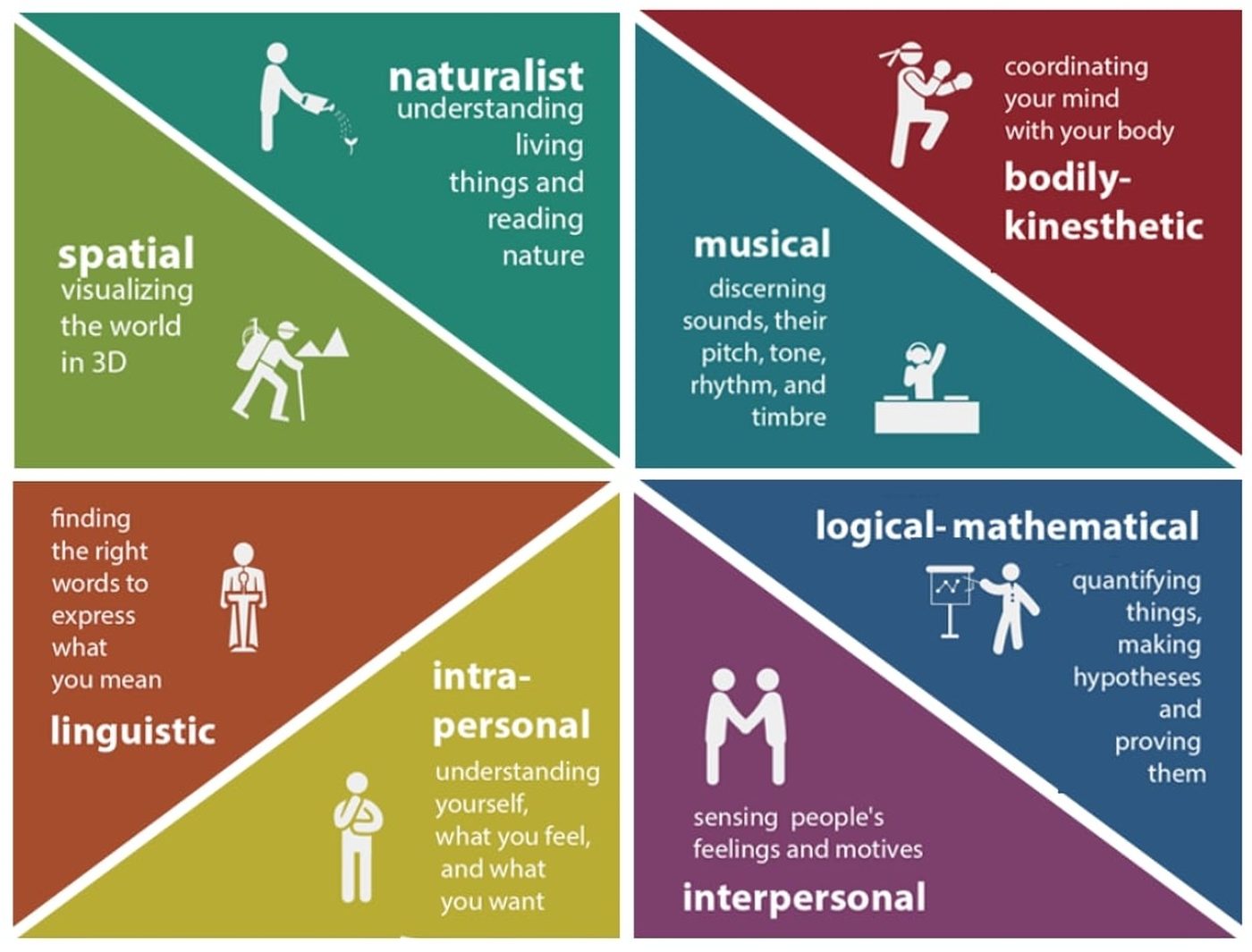
If you understand the uniqueness and diversity of the new paradigm, it can easily be concluded that a higher education set-up will have to be very inclusive. It does not need to be extension of society rather it will have to become a microcosm of society. What is needed in society is taught in a university and not vice-versa. Learning would have to be more and more outcome-based instead of grade-based. It might be possible that a Masters’ Program in Business Administration may mandate a revenue-positive startup as a basic condition of a successful MBA. No university can boast of big student strength because accountability checks will not allow enrolments without placements. A single duration program model may not survive the rigour and challenges of future rather floating credits for working professionals might become a preferred option. Such universities might opt for not one currency payment model but multi-currency payment model. It might be both a cash and kind model while both are tokenized. What I am trying to understand here is that the uniform rules of the LOLR consensus system are not going to work at all in the learning economy whether it is school education or higher education. Would there be a different model? Yes, but not one rather many.
7.6.0 Potential size of learning economy
A rough estimate tells us that the size of the global education economy is over $7 trillion today. If 1600 million students are learning at one time, it is creating basically a per capita economic output of around $4,400. Today, the world has over 8 million schools, nearly 14000 degree-awarding universities and over 200,000 colleges and tertiary institutions. The size of online edtech companies is not less also. Today, the entire output of the learning economy is controlled by a consensus model that is inflationary as well as going obsolete. It is no longer a question of sticking with a fiat currency rather it is an existential question for the knowledge traditions of society. In nutshell, this sector is a representation of all the eight economies being discussed in this book. Starting with housing and urban habitat, moving to attention and agriculture, from governance to relationships, this sector can resurrect itself as not one but multiple avatars of network state. A tokenized alternative gives multiple paths to educational institutions. I am not of the opinion that each campus would need a different coin but I am of the opinion that each campus must remain autonomous in securing its value over time. Any erosion would leave humans into doldrums. If you see with slightly deeper attention here, you will notice that these colleges and schools will remain public activity zones, will maintain learning as their core engine but they will just forget the rules imposed by LOLR managers. It would be like shifting from one consensus to another one.
7.7.0 “First 50 years of stake after 5000 years of debt”
January 10th, 2065: The dissertation defence ran for four hours which everyone agreed afterward was appropriate. Priya Adeyemi-Voss was 11 years old when her mother, an anthropology student used to read out aloud from her favourite book called Debt: The First 5,000 Years: ….the last five thousand years have seen the elaboration of a complex web of moral and religious doctrines on the subject of debt and credit…. She had not understood it then. She understood it, twenty-five years later, well enough to have spent a decade building the argument that would become her own book — the one that was just approved by the committee.
It had a provocative title: 50 Years of Stake After 5000 Years of Debt. "You know what everyone's going to say," her advisor told her afterward, over coffee gone cold in paper cups. "They're going to say you're the student who finished Graeber's sentence." "He didn't leave a sentence unfinished," Priya said. "He left a door open. I just walked through it holding different tools." The book's argument, stripped to its skeleton, went like this. Debt, Priya wrote, was never really about money. It was about accounting — the reduction of an open-ended human relationship, full of unrepayable gratitude and unrepayable grievance, into a closed, quantified claim that one party held over another. A debt has a direction. It points from creditor to debtor like an arrow, and the whole moral architecture of the last five millennia had been built to keep that arrow pointing the same way until the number hit zero. What changed, in the decades after 2020s she was writing about, was not that people stopped extending each other value. They extended more of it than ever, faster, in smaller and stranger units, to more people they'd never meet. There were over 18.76 billion staking contracts on different chains. What changed was the shape of the claim. A stake, she wrote, in the passage her committee would later argue over for an hour, is not an arrow. It is a strand in something more like a web — or, more precisely, a fabric, since a single strand can pass through many hands at once and still hold its tension in all directions simultaneously. To stake is not to lend, expecting a fixed return by a fixed date. It is to express — publicly, verifiably, and at some real cost to yourself — that you believe in a person, a project, a proposition strongly enough to put something of your own at risk on its behalf. This was not, she was careful to note, an idea she had invented. It had emerged, fully formed as an economic architecture, out of a strange and specific body of work — a small collective of economists and protocol designers who called themselves an Economic Space Agency17, and who had spent the 2020s trying to answer a question: what would an economy look like if it were native to the internet instead of grafted onto it?
Under the old regime, Priya wrote, value had to be certified from above — by a bank, a state, a central authority whose signature turned a promise into money. Debt required a debtor and a creditor and, standing behind them both, an enforcer. The genius of the staking protocols — and it took the field the better part of a decade to see it as genius rather than gimmick — was to replace the enforcer with the network itself. When you staked on something, under these systems, you weren't handing your value to a single counterparty who now owed you. You were locking it into a shared, transparent commitment — visible to everyone, adjustable by no one alone — that could then, astonishingly, be staked again. Re-staked. The same conviction, the same committed value, could underwrite not just the project you believed in, but a second structure built on top of it, and a third built on top of that, each new layer borrowing the trust of the layer below without ever unwinding it. Trust, in other words, stopped being a scarce resource you spent down to zero. It became something closer to a renewable one — compounding, provided the thing underneath it kept holding.
She was careful, here, to note the danger too, because the book was not a fairy tale. A structure built from re-staked conviction is only as strong as its deepest layer. When something below gives way — a false claim, a collapsed project, a betrayed commitment — the failure does not stay contained. It runs upward through every layer that trusted it, and the penalty is not merely financial. Under these systems, to have staked falsely, or carelessly, and be found out, was to be "slashed" — a portion of your committed value simply and automatically forfeit, visible to the whole network, the way a reputation used to be ruined by rumour, except now it happened in seconds and could not be argued with. A world of mutual staking is not a world without consequence. It is a world where consequence stopped being something a court decided, after the fact, in whoever's favour could afford the better lawyer — and became something the structure itself enforced, instantly, on everyone, according to rules written down and agreed to in advance.
Because the old debt economy had a narrow definition of value: whatever could be repaid with interest, denominated in a currency a state was willing to defend. Care work, art, the slow unglamorous labour of keeping a river clean or a neighbourhood fed, had never fit that definition, and so had spent five thousand years being either unpaid, underpaid, or quietly extracted as somebody's unrecognized debt to somebody else. The protocols didn't solve this by decree, Priya wrote. Nobody legislated that care work was now worth something. What happened was structural: because these systems let any group of people collectively define, and then stake on, their own criteria for what counted as value-creating, art collectives, caregiving networks, and environmental restoration projects could build their own economic spaces from scratch — spaces where dividends flowed not to whoever owned the most capital, but to whoever the network agreed had actually created something worth having. A mother's decade of unpaid care could, for the first time in the history of accounting, be staked on, re-staked, and made liquid — not because a bank decided to value it, but because the people who depended on it did.
At the reception afterward, a younger student — the kind who still asked questions instead of making statements dressed as questions — cornered Priya near the drinks table.
"So is it utopia?" she asked. "Genuinely. Is this a good ending?" Priya thought about the arrow and the web. About the courtroom and the slash. About her mother's decade of care work, and the version of the economy that had never once thought to ask what it was worth. "It's not an ending," she said. "Graeber's whole point was that the arrow-shaped kind of value was a story — one we told for five thousand years until we mistook it for nature. This is just the part of the story where we noticed we were telling it and started telling a different one on purpose. Whether it's a good one—" she shrugged and meant it honestly. "Ask me again in fifty years."
Notes
- Davidson, Sinclair, The Limits of Artificial Intelligence (May 21, 2025). Available at SSRN: https://ssrn.com/abstract=5262865 or http://dx.doi.org/10.2139/ssrn.5262865
- Coined by researcher and UC Santa Barbara professor Matt Beane book, The Skill Code: How to Save Human Ability in an Age of Intelligent Machines.
- This entire story is a fictionalized piece on the cutting-edge work of Economic Space Agency primarily represented in a book called “Protocols for a post-capitalist expression” written by Dick Bryan, Akseli Virtanen and Jorge Lopez.