Chapter 9 · Relationships
No woman is slut; each kid is ours
27 min read · 10 sections · starts on p. 167
An "untaboo" reading of intimacy, from India and pre-industrial Europe to two millennia of erotica. Crypto is still trapped in the fiat world's taboos; it needs a care manifesto, intimacy commons and a society designed around free-range men and women, where every child is the community's.
This chapter needs a special prescription for reading. It is going to be structured a bit differently. Normally, we look at things analytically, but in this chapter, I ask my readers to look at things from an integrated lens. It means that one should look at not one thing but at the overlapping and interdependent nature of things. We are not going to discuss porn in isolation. We are not going to meditate over drugs with absolute focus and things will not be much different with prostitution. These are the topics that have a lot of taboo elements. That is why we need to indulge in an “Untaboo” practice. That takes us to certain memories of an almostlost history. Looking at them through a modern lens often distorts practices that were once matters of basic survival, community cohesion, or spiritual devotion. However, they were, once, important intersections of domestic life, gender equality, and psychoactive consumption.
9.1.0 Untaboo your memory: a case from India
Here are a few distinct historical examples backed by scholarly research that illustrate men and women consuming the intoxicating beverages together in their homes or villages. In the cold desert of the Spiti Valley (India), home-brewed alcoholic beverages like Chhang (a turbid, beer-like beverage fermented from local barley) and Arak (a stronger, distilled spirit) have been the staples of the household economy since ancient times. Far from being classified as a transgressive vice, alcohol plays a legitimate, fully normalized role in family life. Because of the extreme winters, these beverages are regularly consumed at home as a crucial form of first-line analgesia to manage minor pain, provide warmth, and encourage emotional openness during long periods of isolation21. Tribal women and men sit together alongside elders to drink and play cards. In a society with some prevalence of polyandry, it functions as a foundational tool for collective psychological release and community cohesion.
Kinnaur, which sits adjacent to the Indo-Tibetan border, features a distinct tribal lifestyle where the distillation of indigenous liquors like Angoori (made from local grapes), Ghanti (made from wild apricots, peaches, or pears), and Phasur is highly pervasive. The production of these beverages is fundamentally a homebased cottage industry run and managed by tribal women, who hold the indigenous ecological knowledge of natural starter cultures22 (locally known as Phab or Khameer). In Kinnauri culture, offering home-brewed drinks is the ultimate hallmark of hospitality. A family is culturally expected to offer Ghanti or Angoori to any guest entering the home, regardless of gender. Furthermore, the practice is completely validated by local religious frameworks: the worship of village deities (Devtas) is considered spiritually incomplete without the ritual offering and subsequent communal consumption of liquor by the village collective23. It is startling to notice the high degree of gender egalitarianism historically present in indigenous mountain societies compared to the rigid patriarchal hierarchies of the agrarian plains. Because women held primary economic and agricultural workloads, as well as control over the fermentation process, their participation in the social and dietary consumption of these beverages was a natural extension of their status in the household.
In traditional India, cannabis cultivation and integration into cultural life date back more than two thousand years24. Rather than being restricted to a marginalized counter-culture, cannabis—specifically in the form of Bhang (a liquid preparation made from crushed cannabis leaves, milk, and spices)—became a staple of domestic and village celebrations. In religious and social settings, particularly during festivals like Holi (the festival of colours) or Maha Shivaratri, traditional gender divisions and rigid social hierarchies were intentionally dissolved for a day.
9.1.1 Untaboo your memory: a case from pre-industrial Europe
To a modern observer, the idea of a family sitting around a table drinking alcohol for breakfast, lunch, and dinner may seem highly inappropriate. However, in medieval and early modern Europe, mixed-gender, multi-generational alcohol consumption was an absolute biological necessity. Due to poor infrastructure and non-existent sanitation, natural water supplies in European villages were routinely contaminated and unsafe to drink. Weak, low-alcohol ale (often called "small beer") was the primary, sterile source of hydration and essential caloric nutrition for men, women, and children alike. Crucially, before the industrialization of brewing, making beer was explicitly classified as a domestic chore designated to women, who were known as "alewives" or "brewsters." A woman would brew a batch in her home kitchen; some was saved for her own family's daily consumption, and the surplus was sold to neighbours. The alewife’s home effectively transformed into a neighbourhood social hub where local men and women gathered to drink, exchange news, and conduct village business. Consuming ale together was viewed as a wholesome, moral act of neighbourly socialization and basic bodily sustenance.
Nomadic groups traversing the ancient Eurasian steppes (such as the Scythians and early proto-nomadic tribes of Central Asia) practiced a form of communal, mixed-gender cannabis consumption that was heavily integrated into their spiritual and migratory lifestyles25. Nomadic steppe cultures generally operated with a higher degree of gender egalitarianism than contemporary settled, agricultural empires; women frequently rode horses, hunted, and participated in tribal rituals alongside men. Cannabis was highly prized both for its durable hemp fibres and its psychoactive properties, which were used as tools for communal mourning, medicinal pain relief, and spiritual divination.
9.1.2 A unique history of erotica from the last two millennia
The sociology of past societies across the world would be called radical and far more liberal if seen from the morality lens of today’s ruling class. Greece presents a unique view of female labour participation. There used to be a sharp distinction between low-level street workers called Pornai and high-level erotic companions called Hetairai. The latter were the only category of women in Athens who were allowed to be educated and to socialize with the men in the intellectual drinking parties called symposia. They were not just selling sex; they were selling intellectual intimacy. Men like Pericles and Socrates frequented their homes. The most famous of the Hetairai was Aspasia who was so respected for her mastery of rhetoric that she was said to have influenced Pericles’ speeches and political direction of the city. They were often incredibly wealthy, owning property and even funding public works (like Phryne, who offered to rebuild the city walls of Thebes). It was not just ancient Greece; even ancient India had a somewhat open and respectable view of prostitution too. Kautilya’s Arthashastra, a famous treatise on statecraft (4th century BCE) has dedicated entire sections to regulating courtesans (ganikas) as the state licensed them, taxed their earnings, set wages by rank and even appointed a “Superintendent of Courtesans” (Ganikadhyaksha). There was a hierarchy within them.
- Ganika, the highest rank, was a state-recognized courtesan, often highly educated in the 64 arts (kalas) as described in the Kama Sutra: music, dance, painting, even logic and mathematics.
- Rupajiva, the one who lives by her beauty, a lower and more transactional tier.
- In later periods after Arthashastra, another category, Devadasi, emerged; they were temple dancers married to a deity.
It was not just a one-off period of ancient history; even medieval history does present similar cases. 1500s Venice was home to the Cortigiana Onesta (the Honest Courtesan). Wives were often confined to the home and were uneducated while the courtesans were the city’s literary and artistic stars. They were published poets, musicians and philosophers. Veronica Franco was a famous courtesan as well as a celebrated author who even hosted King Henry III of France. They were considered a source of civic pride and a luxury export of Venice. They were taxed by the state and occupied a unique social tier and public influence. Even 18th century Japan has something similar. Two highest-ranking courtesans, Tayu and Oiran, were very popular in Edo Japan. They were treated like royalty in Kyoto and Edo. Tayu were so high status that they had the right to refuse a client and Oiran’s parade through the streets used to be a major civic event. They had a three-date rule so that anyone seeking favours would have to wait. They were called “Castle Topplers” whose beauty and status could bankrupt a lord.
9.2.0 Crypto is still trapped in a taboo culture that empowers fiat world
Crypto is yet to embed its feet in history. Whenever we talk of crypto products we generally talk of products made for users. And when we talk of users, we talk of users as individuals. And the point here is all individual users are part of a family, part of a community and descendants of a particular history too. These platforms regard a user as a historically disconnected individual with certain interests and certain hobbies only. But regarding a user as an individual instead of a social unit is both wrong from the lens of history and psychology. Rarely, our assumption of crypto-users is that of social bonding agents; they are always individuals. To decode it further, let us borrow some perspective from the animal world. The "Rat Park" Studies debunked a thesis that drugs were inherently addictive. This research26 flipped the narrative by proving that isolation was the actual catalyst for dependency. Professor Bruce Alexander noticed that historical addiction studies placed rats alone in small, barren, isolated cages with two water bottles: one pure, and one laced with morphine. The lonely rats always drank themselves to near-death with the morphine. Alexander built "Rat Park"—a spacious, communal paradise filled with toys, food, and plenty of other rats of both sexes. When given the same two water choices, the socially connected rats overwhelmingly rejected the morphine water, choosing regular water instead. Even rats that had been previously isolated and forced into a severe morphine addiction drastically reduced their drug intake once introduced to the social community of Rat Park. So, the question for crypto product builders should be what the human equivalent of “Rat Parks” is.
From a clinical psychiatry study27, drug addiction is rarely about pursuing a "high"; it is a functional defence mechanism against painful psychological realities. The paper establishes that individuals suffering from profound loneliness, emotional emptiness, and an inability to form secure human attachments use substances to soothe their inner distress. For instance, opiates are used to blunt intense feelings of isolation and rage, while stimulants are used to combat the crushing, hollow depression brought on by social alienation. Another study28 was done by tracking the clinical notes of nearly 2,000 human patients diagnosed with active substance use disorders (SUD) between 2016 and 2023. It demonstrated that patients with documented, active feelings of loneliness were significantly more vulnerable to severe addiction crises, frequent emergency room presentations, and treatment relapses. The data proved that regardless of the specific drug used (alcohol, cannabis, or opioids), loneliness fundamentally acts as the primary barrier to breaking the addiction cycle.
In another research29 conducted by the Johns Hopkins–Lancet Commission, this massive meta-analysis reviewed decades of global data. The commission explicitly recommended that governments decriminalize minor, non-violent drug offenses (use and possession). The study concluded that aggressive policing and criminalization do not reduce drug consumption; instead, they drive fatal overdoses (by forcing users into unregulated illicit markets), fuel the spread of infectious diseases like HIV and Hepatitis C due to unsafe injection practices, and create systemic racial and socioeconomic disparities. In 2001, Portugal decriminalized the personal possession of all drugs. A seminar paper30 evaluated the first decade of Portugal’s reform. The authors found that contrary to critics' fears, decriminalization did not lead to a "rebound" or surge in drug tourism or mass experimentation. Instead, it led to a significant decrease in problematic drug use, a massive drop in drug-related HIV/AIDS transmission rates, a reduction in overdose fatalities, and an increased number of individuals voluntarily entering drug treatment programs.
9.3.0 Crypto needs a new vision of society
In the last 15 years, the architecture of Crypto startups has been built on the principle of property rights, but this is an individualistic approach and slightly odd. If this approach was right, crypto would have literally produced abundance in the global society. Why did it fail? Why could it not transcend beyond bear-bull phases? The answer is lack of integral thinking inside the crypto-world. That is why there are many blind spots inside crypto ecologies. It does not bother to address why youngsters are opting for loneliness and no sex. Why do women stay single and childless for life? Social relationships is a taboo topic inside crypto. They don't have a view on drugs, prostitution, marriage, dating and sexual choices. The reason is again the same as we discussed in the beginning. Crypto does not understand its enemy. It does not recognize the core man-woman layer of LOLR as the defining challenge. If a man is in debt to woman for her sacrifices and woman is subservient to man for his provisions, this is a mutual slavery. Mother nature made them free. What was a natural gift from man to woman and viceversa was transformed into a debt by LOLR. Porn and prostitution were offsprings of a moral boundary set up by a deeper power. Drugs were banned further so that humans might not feel the eternal bond with each other. Crypto does not address the intersection of multiple indulgences of human life. That needs a care surplus approach.
What should stop a society from turning sick? What market design should naturalize drugs and sex instead of criminalizing them? Just imagine the turnover of liquor and cigarette industries. A rough estimate puts their consumer footprint of around $3 trillion. What a denial of crypto-as-care economy! It is a sad situation that the entire market cap of crypto sector is less than this. The point is not to encourage smoking or drinking rather the issue is lack of domestic recognition of liquor and tobacco in human relationships. A drug can be medicine too as well as a tax revenue generator engine for local economy too. But a centralized regime can push it into either black markets or massive rent-creating ones too. So, LOLR is a design failure if looked from a relationship perspective. Crypto never captured this failure as an opportunity.
9.4.0 Crypto can begin with what makes it epic
There is a civilizational reason for this failure. To understand this, I will tell you a story from Mahabharata. My teacher, Professor GN Devy, calls Mahabharata an epic for a reason. He states that epic is a unique kind of creative enterprise that happens only when society is undergoing a large civilizational shift. When India was moving from nomadic-pastoral way of life to urban way of life, this was the period when Mahabharata was created. This creative phase of Mahabharata was spread over 500 years. So, it was a multi-generational process. It was first created as an oral version not as a written text. The story that matters here is about the gambling sequence that happened when the two warring factions of the Kuru family, Kauravas and Pandavas played a game of dice. Pandava king Yudhishthir kept on betting and losing. He did not stop ever and kept losing. He lost his army, his kingdom, his ornaments and then, lost something that was unbelievable. He gambled away his first brother, then second one, third one, fourth one and finally himself. Even after that, he did bet his own wife, Draupadi and lost her too. From an urban view, this is a plain case of immoral choices. But hold on. Imagine the same thing from a nomadic class of warriors who used to gamble daily as part of their funny evening routine. For them, betting relatives or themselves was part of psychological training on the symbolic nature of win and loss. In a settled world with stable moral values, this gambling would have been either a playful thing or a morally bad thing but in a period of paradigm shift, it was neither. The two opposite moral values stayed in such a shift.
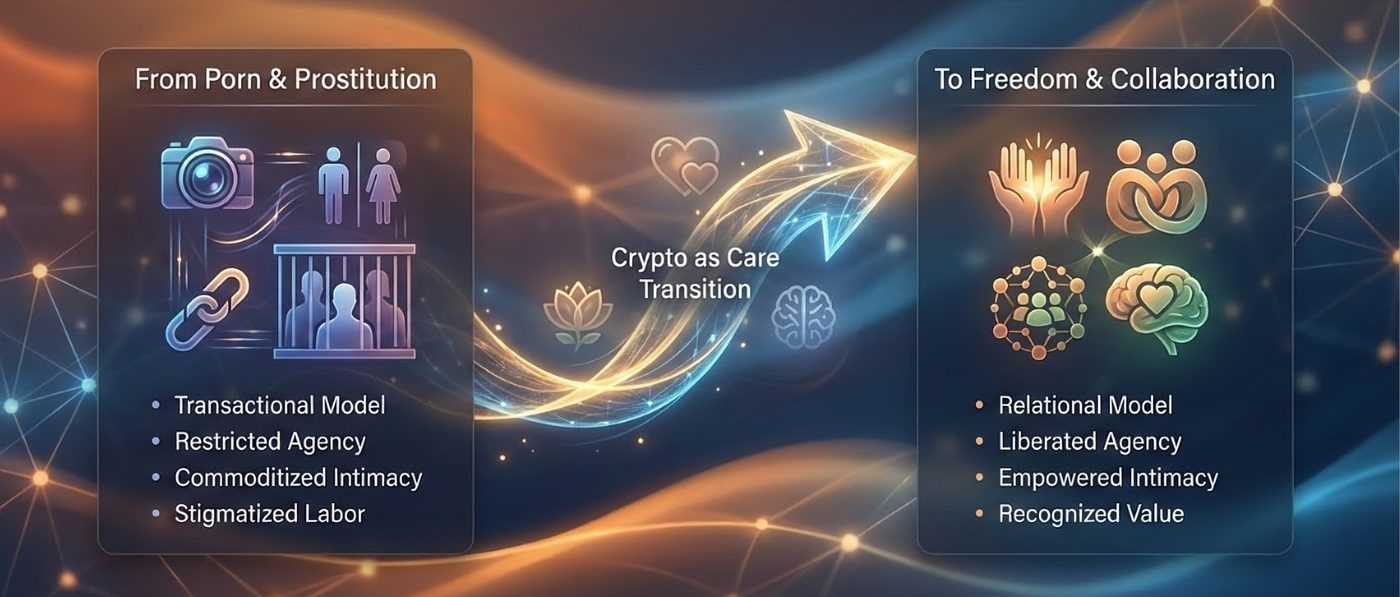
Crypto has ushered a new paradigm. It turns a cloud reality into a tangible entity. Blockchains are concrete value architectures. What nation-states built via metropolitan societies, the digital shift has created networks. Crypto is converting these into network states that begin digitally but end up physically. Bitcoin is still a network society, two steps short of network state. Ethereum may be called network union, one step short of network state again. Solana is in the similar bucket. A new civilization is waking up via these huge changes, and they are in a figuring up mode. The man-woman social contract is still in this phase. Crypto founders are still in startup phase but yet to kickstart the civilizational understanding mode. The abundance thesis is yet to be activated in crypto though AI has done its bit. It won’t be an understatement if it is said that care surplus goals of crypto are yet to be activated. You can have a glimpse of those in the following agenda: -
- Crypto has no stance on pro-natalism yet
- Crypto audience is confused over marriage
- Crypto people do not treat single and childless women fairly
- Crypto protocols don’t do airdrops for single mothers
- Crypto is yet to take tokenization of care-hours seriously
9.5.0 Crypto needs a care manifesto
For a comprehensive approach, Crypto needs a care manifesto that can handle all the above-mentioned gaps in decentralized projects but it is first and foremost a civilizational task. Let us assume that you are the PM of a country and you believe that LOLR consensus is a sacrosanct model. It does not need any changes as it is sufficient at moral, economic and political level. If this is true, why are men and women not getting married? If they are, why are they not going for kids? Over 99% of the developed and developing world population has entered a terminal decline because the total fertility rate per woman has been declining for the last few decades consistently. No statesman would ever compromise on losing demographic dividend but if their belief in LOLR is really intact, why are their actions not able to prevent such a crisis? The obvious answer is that men and women are no more comfortable with the existing social contract. The circumstances have completely altered. A lender-of-last-resort is orchestrating the entire design just to maximize a fake version of human welfare as well as ecological sustainability. It means that men and women are not able to see the founding principle of whatever normative universe is around them. The norms around nuclear family are not working properly. The norms around pre-natal and post-natal health are dysfunctional. The norms around cohabiting men and women are misplaced. That is where crypto needs to propose a new founding principle:
“No woman is slut: each kid is ours.”
This is the principle that will rewrite whatever is wrong with our consensus systems. It means cleaning the slate completely. The simplest way of doing this is to drop the moral judgement in favour of larger planetary re-design. The moment one decides “no woman is slut”, it cleanses the proprietary impulse inside the patriarchal character of LOLR. It deletes the anti-women legal provisions in our civil prosecution straightaway. It becomes a collective force against those powers that hate women. Secondly, when a human formation decides “each kid is ours”, it puts pronatalism above every moral value. Any consenting birth from a healthy adult woman is a gift of mother nature. None should bother about the DNA fingerprinting of lineage. A kid’s health is far more important than the fact whose fatherhood it carries.
Now, hold on. Just ask yourself how comfortable you are with these two interwoven principles. You might be a bit scandalized now. I can accept this shock of yours. Let us assume that you are a Japanese statesman who is posed this question. Of course, he would not accept this as the founding principle of his nation. It is obnoxious for him and hence, totally unacceptable to him. Okay, fair enough. Now, ask him how he plans to solve the extinction of the Japanese population within this century? His peers could not come up with anything in the last four decades. Today, Japan is a country with an average age of over 48 which means that the number of fertile women is in terminal decline. Now, go back to the same principle “no woman is slut”. A country that wastes the fertility of its women population is not able to digest this principle. Why? The answer is that LOLR is a masochist principle. It does not give women foundational freedom. It may give them the right to study, the right to earn, right to vote but its notion of equality never transcends deep masculine norms.
So, I repeat the principle again, “No woman is slut; each kid is ours” but before getting angry with me, don’t assume yourself a citizen of a great nation. Just assume yourself as a human being who wants to see love all around. Your anger will vanish. All this is critical to understand. LOLR is not a simple gravitational force. It works by building a massive universal moral grid out of us. When our man-woman code is dysfunctional but still unchallenged, it keeps repeating itself even if it does not make any sense. That is why I am proposing this rupture and precisely for the sake of the foundational goal of care surplus. Even LOLR was made to ensure this but it deviated somewhere in the middle when it started working more for males and less for females, when it started working more for rich and less for the poor, when it started working more for America and less for Ethiopia. LOLR is no longer a political force, it is a civilizational dead-lock. If we have to get out of this, the only way is to rewrite the foundational principle and that is “No woman is slut; each kid is ours.”
A shift from LOLR to a new consensus system needs a shift from cash surplus to care surplus. Intimacy spaces are a subset of a larger superset of care surplus. We are used to regarding these spaces as isolated taboo spaces but this is a wrong approach. Once we look at the world with a new vision of civilization, things will appear different. Sex and pornography would not appear as crimes rather viewers would work to remove the excesses around these activities. Prostitution won’t appear illegal, it would become a natural sexual activity, some inside marriage and some outside marriage. Drugs would be used neither out of desperation nor beyond what is needed. That is why a new consensus system is needed to undo whatever LOLR has done in these domains. For example, Sex work and pornography have never actually been “ungoverned” rather they have been badly governed. A patchwork of criminalization, stigma, informal power structures and unregulated platforms were designed but not for the people actually doing the labour. The crux of the problem is that stigma and criminalization have not eliminated the underlying activity. They have just eliminated the governance of it, pushing the risk on to vulnerable participants while allowing the least accountable actors (traffickers, exploitative platforms, predatory intermediaries) to operate with least oversight. LOLR stakeholders don’t engage with these questions as it would open up the critical problems in the innermost layer that is man-woman social contract. Keeping these spaces in taboo zone absolves LOLR from any accountability and maintains moral supremacy even if it is deeply fake or problematic. Crypto has been a pure peer to peer space and that is why it needs to build a serious discourse on intimacy commons inside the industry. From an organizational perspective, the rewrite needs to start at level of small groups of sex workers and those affected, apartment societies suffering from loneliness and municipal corporations suffering with the excess of problems like old age population, high rates of crime, unemployment and rich-poor divide.
9.6.0 Crypto builds dozens of new intimacy commons
Why don’t porn sites have banking access? Why does prostitution industry not get banking facilities? Why don’t drugs get community banking support? The reason is that LOLR is not just a financial player; it is also a moral player. It draws the boundaries of who can get access to payments and credit facilities. It decides the reputation of its players in ways that prolong its own life. Instead of facing these problems in a piecemeal fashion, Crypto needs to build an Intimacy Commons Framework by borrowing from Elinor Ostrom’s work on governing shared resources. The resource being governed is not bodies or sex itself rather it is the conditions under which intimate labour and expression happen. Once the founding principle “No woman is slut; each kid is ours” is accepted, the rest can take numerous forms.
Let us not make the mistake of bringing LOLR back into our legal reconstruction. Of course, there will be rules but not just one kind of rules but many kinds of the same. Let us take one rule, “Kill the coercion behind any form of sex whether it is inside marriage or outside.” This might become a hotbed of what is coercion and how to stop the same if it is inside marriage. I won’t go into making them universal because they are context and culture-specific. Ethereum may build one form of rules while Solana may try some other form of practices. I am asking only for single clarity on foundational principle “No woman is slut; each kid is ours”. All the rest follows from this. Kids might be given free education and housing but what if one community wants to train kids in martial arts by keeping them in tougher terrains and the other one decides to go nomadic. One group may opt for polyandry while the other may opt for polygamy. One might restrict professional sex practice before 21 and after 40 or some might not put any restriction at all. One might allow virtual porn while prohibiting physical indulgence completely. One might allow worker guilds to control governance while one might allow only the matriarch of the house to design rules. One might ask for police-first resolution of conflicts or disputes while the others might go for graded sanctions’ path. What is the point of these diverse things? The point is that crypto is a civilizational re-write. Just change the one tectonic plate, the rest will get rewritten automatically but not in the ways we are used to. LOLR is a conceptual grammar too. If we remain too locked in the same, we might end up resurrecting this gravitational force from oblivion once again.
9.7.0 Design a crypto society based on actions of free-range men & women
There is a huge possibility that the future of intimacy labour will be a spectrum not a monolith because making it one category will repeat what is broken about current approaches. There would be domains as mentioned in the table below and within them, there would be multiple categories. Some might opt for open market entry model in pay-and-play form, some might go for club-like subscription model with high entry barriers, some might opt for live-streaming only and some might opt for non-sexual cuddling or platonic friendships.
| Domain | Examples |
|---|---|
| In-person sex work | Full-service work, companionship |
| Pornographic performance | Studio and independent adult content |
| Digital/creator economy intimacy | Subscription platforms, custom content |
| Companionship | Professional cuddling, intimacy coaching, platonic companionship services |
| Matchmaking & relationship facilitation | Curated introduction services |
It is not the case here that there won’t emerge frictions if crypto comes up with new intimacy architectures. Of course, there would be. We are not assuming that sex-work abolition brigade will disappear or prostitution will become a respected profession. For some societies, Nordic model (criminalizing buyers, not sellers of sex) will work while for others, New Zealand model of full decriminalization of sex work would be suitable. These are genuinely empirical and ethically testing scenarios. No pre-assumed answers can be given here. The answers would come from the collective outcomes of free-range men and women. The topology, history and culture of a society would decide the eventual shapes. There is a huge possibility tomorrow that Colorado state in the USA opts for full decriminalization of drugs and sex work because of subtle co-dependencies. One might see the rise of a Silk Route trading mindset where religious sites and pleasure sites could co-exist as neighbourhoods. All the tourism-friendly nations might realize that they are natural sites of network states if they allow liberal access to sex and drugs but only inside network states within their own jurisdictions. Some bio-medical research community might come up with a THC-derived cancer drug, or some epilepsy or Alzheimer doctors start a hospital chain in the guise of network states to treat thousands of patients in their own locations. Even Municipal corporations might come up with liberal rules around porn, prostitution and drugs to co-exist with crypto capitalism too. What is being aimed via these random ideas? The answer is that we are on the verge of multiple experiments opening up via crypto on the social engineering front. Not all of them will be perfect and not all of them will succeed but we should not expect the cleansing of LOLR guilt to be done in such a short time.
9.8.0 Dream 2032: Belonging: a floating family RWA startup in Malaysia
A couple, Nora and Richard were living in the Network school near Singapore for nearly 6 months since Jan 2026. They found a strange trend that many people (>70%) were leaving network school or not planning to renew their stay after living there for 1 month. For an institution like Network School to become a longterm reality, it needed at least a composition of three kinds of people. The first is permanent residents, the second one is long-term residents, and the third one is short-term residents. If 15-20% people are permanent residents, 30-40% people are long-term residents (at least 1 year) and the rest are short-term residents (at least 1 month), this structure can survive as well as grow. But the couple realized that the long-term residents are less than 10%. There are no permanent residents except the founders and employees of the Network School. 70% leave after one month and around 90% leave in a period that is less than a year. So, the system doesn't have those segments of population who would build longish practices and long-term social and personal investments.
Nora and Richard realized that the entire experiment was working like a leaking bucket. Particularly if you look at 24 hours of the residents, 7am to 7pm was a life of hyperactivity. They go to the gym; they go to co-working spaces; they present and brainstorm ideas; they conduct meet-ups and so on. But once the evening falls in, there is a certain kind of boredom in those people because now they need somebody with whom they can connect without any purpose; with whom they can chat casually; with whom they can drink; with whom they can sleep; with whom they can wander and so on. Now the problem is that the majority are short-term residents. Long-term residents are living in flats. So, they are not interacting much with short-term residents. After 7 pm, the mood in the entire school is down and lonely. It does not mean that parties and events don’t happen. Yes, they do but they are generally on the weekends and the entry is paid. Building trust in a short-term residency is a tricky issue. If you are a woman, her problem multiplies whether to trust a person or not as he might leave the space after one month. She needs more women, but the school had less than 25% of the women residents. If one has kids, you need more kids around with supportive ecology. So, the system lacks a care surplus environment that is possible only if there are longterm residents. Nora and Richard come up with a solution called BELONGING, a sub-project. They stayed even after Balaji moved Network School to Kazakhstan due to some political troubles. They waited for some time and let the emotions settle. They raised some funding and they took one big tower of 500 flats on a sub-lease model in the same forest city. They came up with a unique plan. They opted for a platform-first approach. They created a social network where anybody could come up and create groups, communities and friendships. Instead of one single person, a group of five can rent a 3 BHK by the payment ($1500 x 2) would be done by only two members of that group. This included food twice-a-day, unlimited internet, co-working facility, waste management, water and electricity facilities for all the five members. So, two are paying but three won’t. They could figure out their grouping on the platform. The goal was simple. Each group was to create a DAO with up to eight members paying a fee of 100 USDT/USDC. Each member would get 10 credits worth $10 each. The members can transfer a credit whenever they like someone in the group. The group will keep on interacting via posts, chats and other interactions. The basic rule is that you must spend all your credits and earn as many as possible. If each member earns a minimum of 6 credits, he/she will be considered for final group formation. The top credit earners will be asked after 4 weeks whether they wish to formalize their association. If the answer is yes, they will be offered the option to come and stay in the city. People could join multiple groups to figure out the most suitable matches for group partnership. To follow this up, the founder duo targeted three population segments. The first was the old people staying in Bali, Bangkok and other ASEAN locations. The second one were single mothers who were looking for friendly co-parents. The third segment was those looking for non-marital options but had gone past the prime dating age.
To their surprise, the social network created a huge attraction. Nearly 100,000 people joined in the first month of the platform launch. Single mothers joined in a big way. Old people who were living alone also joined in large numbers. Even live-in couples and married couples with kids joined. Within the first 90 days, the 500 flats were booked and residents started pouring in. The demand rose so fast that Nora and Richard had to sub-lease four more towers and by the year-end, they had nearly 10k long-term residents living in their location. Now, there were not just startups there; there were bakers, tailors, florists, chefs, teachers, artists, alternative medicine practitioners, mid-wives, organic farmers but working with hydroponics and so on. The people were building startups, doing meet-ups, improving their fitness and doing a zillion things in the morning but were spending time with their close group in their own flats. Soon, the location had two schools, one for primary kids and the other one for young adults. The founders never realized that they had created a floating family city in such a short time. The Malaysian government was quite happy with this experiment and added a lot of income tax and corporate tax exemptions for the residents. Soon, the BELONGING increased to 20 towers and by 2032, they had 50 towers where nearly 100,000 people were living. What was unique about the demographic composition was that single mothers could associate with other single mothers or married couples for sharing cost and care. Old people could sponsor young couples or singles in exchange for feeling like a family. Marriage was not a necessity for finding company in this new set-up. Over a period of three years, the people started calling it the better version of the Network School. It had 60% long-term residents, and the share of short-term residents went down from over 70% to 30% while >10% became permanent residents. Marriage rates jumped in this set-up and pregnancy rates also increased substantially. The gender ratio was around 50:50 now. The project was so successful in terms of goodwill that Solana started sponsoring 100 single mothers per annum for this project. Stablecoin companies announced special promotion packages for these residents. Sui came up with free study plans for 500 kids in schools for the project. Y Combinator was so convinced that this second version of the Network School was a great milestone of human society. They launched a $2 billion funding program for helping startups who could create unique value around RWA space and human care economy. All prominent crypto start-ups started coming and set up their offices in this area. So, it turned into a Silicon Valley outside Silicon Valley with one serious difference. The 90% of the population was focussed on building a happy and cohesive social formation. What began as a sub-project outgrew the parent and eventually, could become what was the intended goal.
Notes
- Vora, S. (2018). An exploratory study of Mental Health and wellbeing in the Spiti Valley. Indian Journal of Mental Health, 5(4), 486–490.
- Rawat, J. M., Pandey, S., Debbarma, P., & Rawat, B. (2021). Preparation of Alcoholic Beverages by Tribal Communities in the Indian Himalayan Region: A Review on Traditional and Ethnic Consideration. Frontiers in Sustainable Food Systems, 5. https://doi.org/10.3389/fsufs.2021.672411
- Lataa, S. (2021). Documentation of traditional alcoholic beverages and their indigenous utilization pattern by Kinnaura tribes of Himachal Pradesh. Indian Journal of Traditional Knowledge, 20(4), 1002–1013.
- Karki, P., & Rangaswamy, M. (2022). A Review of Historical Context and Current Research on Cannabis Use in India. Indian Journal of Psychological Medicine, 45(2), 105-116. https://doi.org/10.1177/02537176221109272
- Crocq, M.-A. (2020). History of cannabis and the endocannabinoid system. Dialogues in Clinical Neuroscience, 22(3), 223-228. https://doi.org/10.31887/dcns.2020.22.3/mcrocq
- Alexander, B. K., Beyerstein, B. L., Hadaway, P. F., & Coambs, R. B. (1981). Effect of early and later colony housing on oral ingestion of morphine in rats. Psychopharmacology, 75(2), 132-137
- Khantzian, E. J. (1997). The self-medication hypothesis of substance use disorders: A reconsideration and recent applications. Harvard Review of Psychiatry, 4(5), 231-244.
- Crabtree, J. P., Perera, G., Stewart, R., & Pinto da Costa, M. (2025). The relationship between loneliness and adverse clinical health in substance use disorders: a retrospective cohort study from south London. Journal of Psychiatric Research, 190, 364-371
- Csete, J., Kamarulzaman, A., Kazatchkine, M. D., et al. (2016). Public health and international drug policy. The Lancet, 387(10026), 1427–1480.
- Félix, S., Portugal, P., & Tavares, A. S. (2017). Going after the Addiction, Not the Addicted: The Impact of Drug Decriminalization in Portugal. IZA Discussion Paper Series, No. 10895